Call us today
+1 406 640 1748

The best time to visit Namibia for wildlife is the dry season, from May to October. Animals gather at Etosha’s waterholes, the grass is low, the days are mild and the roads are dry. Wildlife viewing peaks from June to October, when water is scarcest and animals are easiest to find.
The green season, from November to April, is the other Namibia: dramatic skies, newborn animals, superb birding and far fewer visitors — but hotter days, greener (taller) vegetation that hides animals, and the chance of rain. Neither season is wrong; they are different safaris.
Crisscross Namibia Safaris has been designing private, tailor-made safaris here since 2003, and the honest answer we give our own guests is: choose the season that matches what you most want to see, then build the route around it.
Dry season (May–October). Almost no rain. Days are mild to warm (roughly 23–28°C / 73–82°F), nights are cold — close to freezing in the desert in June and July. Vegetation thins out month by month, animals concentrate at permanent water, and viewing gets easier the later you go. June to October is high season: book well ahead.
Green season (November–April). Summer. Hot days (30–34°C / 86–93°F), warm nights, and rain that usually arrives as brief afternoon showers rather than washouts. The country turns green, calving season brings young animals, migratory birds arrive, and parks and lodges are quieter, with lower rates in the low months (January–March, December).
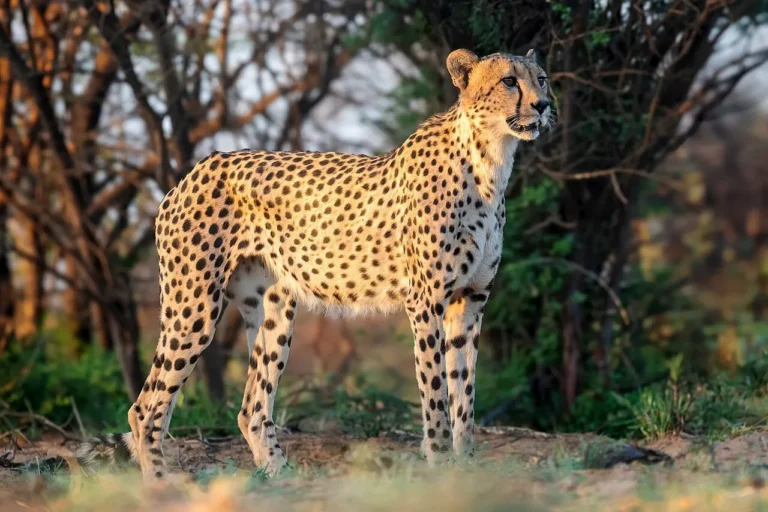
June to October. This is when Etosha National Park delivers its famous waterhole viewing: with almost no surface water elsewhere, elephants, lions, rhinos and herds of game come to the waterholes, and the low vegetation makes them easy to spot. July and August are the peak of it; September and October stay excellent as temperatures climb. Predators such as lions and cheetahs become more visible through the dry months as they hunt around the water sources.
May and April, on the shoulder of the dry season, are the connoisseur’s months: the bush is still relatively low, animals are increasingly at water, predator sightings improve, and there are fewer visitors and lower rates than in high season.
November to March. The green season brings migratory species flocking in, water everywhere to attract birds, and young animals being born. January and February are the heart of it. The trade-off: the same lush vegetation that feeds the birds can hide larger animals in Etosha, so a birding-first trip accepts harder general game viewing.
It depends on the photograph you want. June to October gives clear skies, golden dry-season light, animals at waterholes and dramatic sunrise and sunset colour — the classic safari portfolio. March and April give the green-season alternative: flowering, colourful landscapes after the rains, with dramatic skies, before the bush dries out. October is a fine month for the Skeleton Coast’s stark landscapes.
January to March and November to December are the quiet months: lodges are emptier, low-season rates apply in much of the country, and the experience is more relaxed and personal. April and May are the shoulder-season sweet spot — improving wildlife viewing, stable weather, and rates still below the June–October peak.
January — low season. Summer: up to 34°C (93°F) by day in central regions, ~20°C (68°F) at night, brief afternoon showers, especially in the north. Excellent birding with migratory species; young animals visible; lush vegetation can make Etosha game harder to spot. Pack waterproofs; expect some muddy rural roads; lodges with covered patios earn their keep.
February — low season. Warm and wet, around 30°C (86°F), humid, the landscape lush and green. Migratory birds still prevalent; young animals around water. Thick bush can obscure wildlife in Etosha. Superb for green-landscape photography; stay flexible on road conditions after rain; a guided tour helps, as guides know the wildlife movements.
March — transition. Cooling to around 28°C (82°F), rainfall decreasing, humidity dropping. Vegetation starts to thin, so wildlife gets easier to spot; the end of calving season means young animals are still visible; Etosha becomes more accessible. Quieter parks and lodges, often lower rates, landscapes in bloom.
April — shoulder season. Around 26°C (79°F) by day, cooler nights, rain infrequent, weather stable. Vegetation still low, animals at water sources, predator chances rising; Etosha is a prime destination now. Cooler weather suits hiking the Fish River Canyon. Pack thermals for the nights; demand for accommodation starts to rise, so book guided tours ahead.
May — shoulder season. Around 25°C (77°F) by day, chilly nights — warm clothing is a necessity in the desert. Dry landscape, animals congregating at remaining waterholes, sightings more predictable, and fewer tourists than peak season. Roads are typically good, making it a fine self-drive month; many lodges still offer pre-peak rates.
June — high season begins. Around 24°C (75°F) by day; nights particularly cold in desert areas. Animals are drawn to permanent water; lions and cheetahs become more visible as they hunt; clear skies and beautiful light for photography. Book accommodation and tours well in advance. Layers for warm days and cold nights, and bring binoculars.
July — high season. One of the coldest months: around 23°C (73°F) by day, nights close to freezing in some regions. Wildlife viewing is at its peak — animals gathered at waterholes, dry conditions, excellent visibility; the ideal month for Etosha game drives. Warm jackets, thermals and even a sleeping bag for camping; booking ahead is crucial.
August — high season. Around 24°C (75°F) by day, chilly nights, dry and stable. Sightings continue to be exceptional as animals stay concentrated at water, and migratory birds can also be spotted. Warm clothing for early-morning drives; guided tours add a guide’s reading of animal movements; keep the camera ready.
September — high season. Warming to around 26°C (79°F) by day, nights gradually more comfortable. Animals still at waterholes, thinning vegetation, excellent visibility, vibrant colour against clear skies for photographers. Still high season — book ahead; hydrate and use sunscreen on longer excursions.
October — end of high season. Around 28°C (82°F) by day, warmer nights. Wildlife still frequenting waterholes with excellent visibility, though animals grow less active in the midday heat. A good month for the Skeleton Coast. End-of-season accommodation deals are worth checking. Carry water; dress light.
November — transition. Around 30°C (86°F), still mostly dry, with the first signs of rain late in the month. Game viewing remains good though animals begin to disperse as water becomes available; migratory birds arrive. Fewer tourists and a peaceful feel; the landscape starts to change as the rains approach; cultural festivals may occur.
December — low season. Summer rains begin: around 32°C (90°F), rain in short bursts with plenty of sunshine between. Calving season starts — young animals to see — and birding is rewarding, but thickening vegetation makes general game viewing harder. Pack waterproof gear; road conditions vary, so guided tours are advisable; the post-rain landscapes are uniquely vibrant.
The dry season, May to October. Animals concentrate at waterholes — Etosha’s above all — vegetation is low, and visibility is at its best. June to October is the peak of it.
July and August, for the densest waterhole viewing in the dry season — but June, September and October are close behind, and May offers nearly the same conditions with fewer visitors.
Yes, if your priorities are birds, newborn animals, green landscapes, dramatic skies and quiet lodges at lower rates. You trade away the easiest game viewing: animals disperse and taller vegetation hides them.
June and July — days around 23–24°C (73–75°F) but nights close to freezing in the desert. Pack light clothing for daytime, genuinely warm layers for nights and early-morning drives, sunscreen, insect repellent and good binoculars. Our full packing guide covers the rest.
Yes — Namibia is one of Africa’s safest countries for travellers. Take the standard precautions anywhere: don’t leave valuables visible in a parked car, use the lodge safe, and take care in towns after dark. The risk to manage is the road — long gravel distances and animals at dawn and dusk — which is why our itineraries keep driving to daylight hours.
Yes — guided safaris, cultural experiences and hiking are all available. Crisscross Namibia Safaris designs private guided safaris tailored to you, drawing on experience on the ground since 2003.
If this is your first safari and wildlife is the point: June to October. If you know the country, love birds and green landscapes, or want the lodges to yourselves: the green season. If you want the balance — good viewing, kind weather, calmer prices: April or May.
Then let the route follow the season. Our flagship 10-day Etosha & Sossusvlei safari runs through the dry months, and every itinerary we build is shaped around the month you travel — start with Plan a Safari and tell us when you’re thinking of coming, and we’ll tell you honestly what that month does best.
We are excited to help you personalize your next safari holiday and turn your dreams into memories.
Enquire NowThe owner, André Blaauw, was born and raised in Namibia and has a rich family history and connection to the land.
Our experienced and culturally diverse guides are Namibian born and raised.
André & Michelle are always available to consult with you at any time about your wants and needs via WhatsApp phone or video call, text message or email.
Tailor-made itineraries, accommodations and activities designed specifically for you.
Extensive safety protocols based on over 20 years of on the ground experience.